





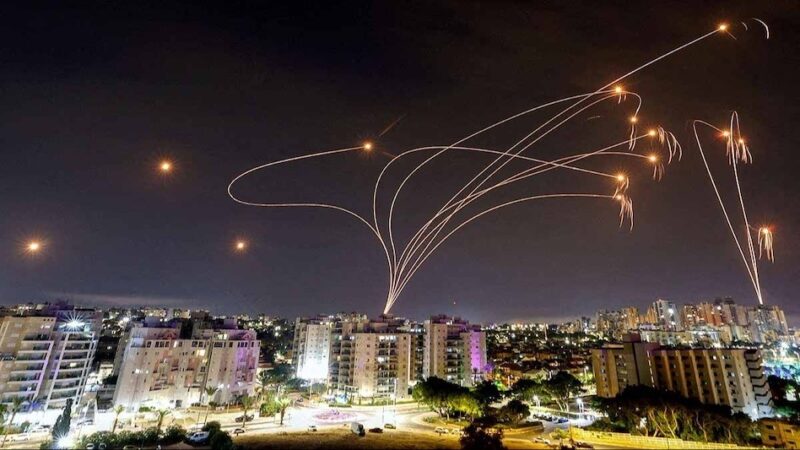
Israel’s Aerial Shield: Israel faces attacks from Hamas, Lebanon, Hezbollah, and ongoing tensions with Iran. To defend against aerial assaults from these terrorist groups and powerful nations, Israel has encircled its entire country with an invisible aerial shield, comprising multiple layers and missile ranges.
At the forefront of this defense is the Iron Dome, the most robust and close-ended weapon system. Deployed in Israel since 2011, the Iron Dome has been instrumental in protecting Israeli civilians from aerial attacks. If the Iron Dome detects 100 rockets heading its way, it intercepts and destroys around 90 of them before they can cause harm.
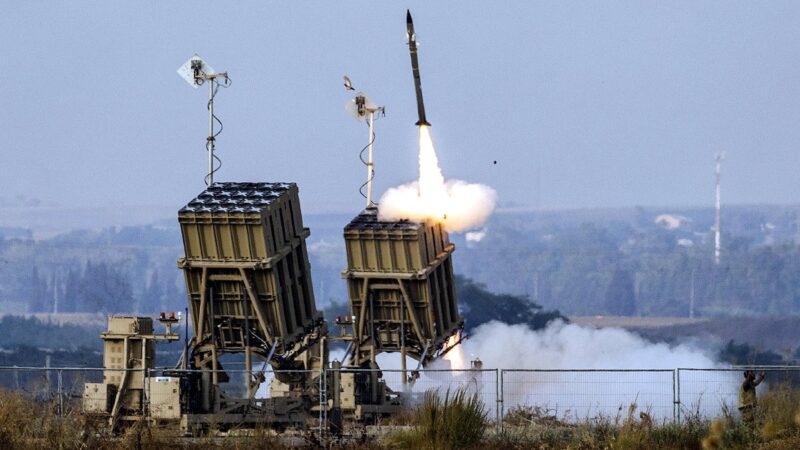
The development of the Iron Dome began in 2006 after Hezbollah militants launched thousands of rockets at Israel, resulting in significant casualties and damage. In response, Israel developed its indigenous Missile Defence Shield, naming it the Iron Dome.
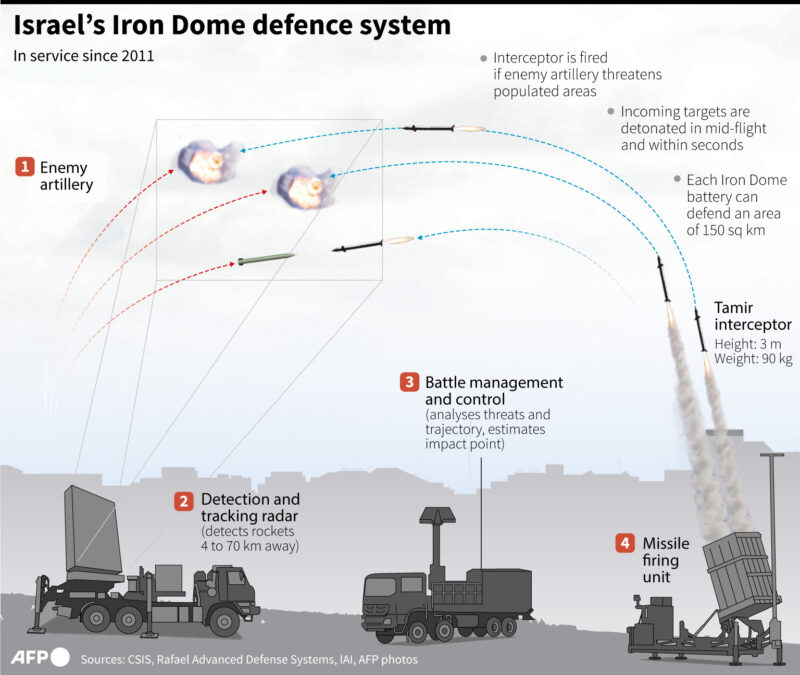
How Does the Iron Dome Work?
As soon as an enemy rocket is launched, the radar system within the Iron Dome identifies and tracks it. The control system calculates the impact point, assessing the potential damage and the trajectory of the rocket to ensure minimal harm. Upon receiving commands from the control system, interceptor missiles, known as Tamir, are fired from launchers to intercept and destroy the enemy rockets mid-air.
Has the Iron Dome Ever Failed?
In 2011, just 24 hours after its deployment, the Iron Dome successfully intercepted and destroyed a rocket launched from Gaza. Since then, its coverage has expanded across the country. By March 2012, the Iron Dome had intercepted 25 out of 99 rockets fired from Gaza. By the end of 2013, its interception capability had increased to 85%, reaching 90% by the end of 2014. Even in 2021, it displayed the same efficacy.
Israel’s Most Reliable Air Defense System
In addition to the Iron Dome, Israel has utilized its advanced weaponry in various operations, including Operation Pillar of Defense, Operation Protective Edge, Sinai insurgency, the 2021 Israel-Palestine conflict, Operation Breaking Dawn, and Operation Shield and Arrow.
The range of the Iron Dome has increased from 150 square kilometers to 250 square kilometers, enabling it to intercept enemy rockets from multiple directions. Equipped with Tamir interceptor missiles, it incorporates electro-optical sensors and steering fins, with each battery housing three to four launchers, each loaded with 20 missiles.
Arrow-2… Advancing towards Enemy Targets at 9000 km/hr
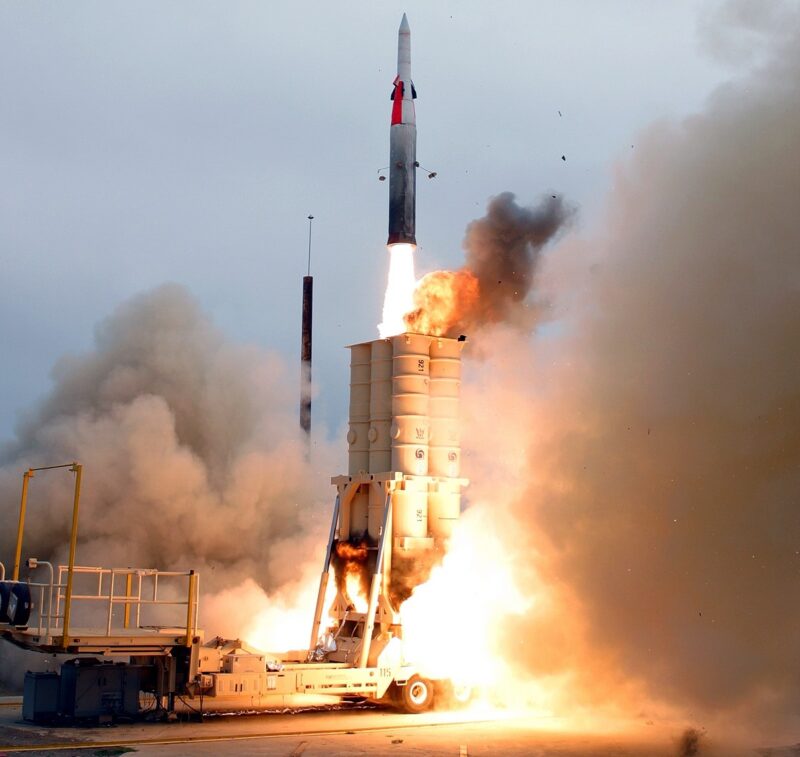
The Arrow missile family, developed for Israel’s aerial defense, includes the Hetz missile. Weighing 1300 kilograms, it comes in three variants, ranging from 22 to 23 feet in height. These missiles are equipped with seekers to ensure precision while gliding through the air, with a 150-kilogram warhead that utilizes directed high-explosive fragmentation.
These solid propellant missiles have a two-stage design, capable of reaching beyond the earth’s atmosphere. Their speed is particularly noteworthy, traveling at 2.5 kilometers per second, equivalent to 9000 kilometers per hour. These missiles are launched from vehicles resembling trucks, containing six canisters from which the missiles are deployed.
Arrow-3… Capable of Neutralizing Satellites in Space
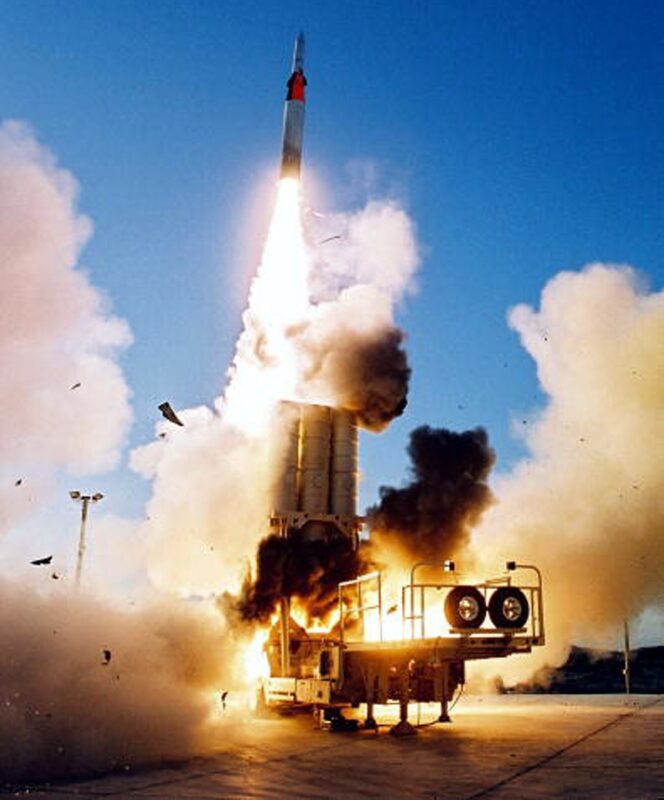
The Arrow-3 missile system is designed to provide aerial defense against threats from beyond the atmosphere. Although Israel has not disclosed its precise capabilities, it is claimed to operate at a faster pace than the Arrow-2 missile, capable of neutralizing satellites in space. Deployed in Israel’s security since 2017, it positions Israel among the select few countries capable of countering airborne satellites.
David’s Sling… A Powerful Ally of the Iron Dome
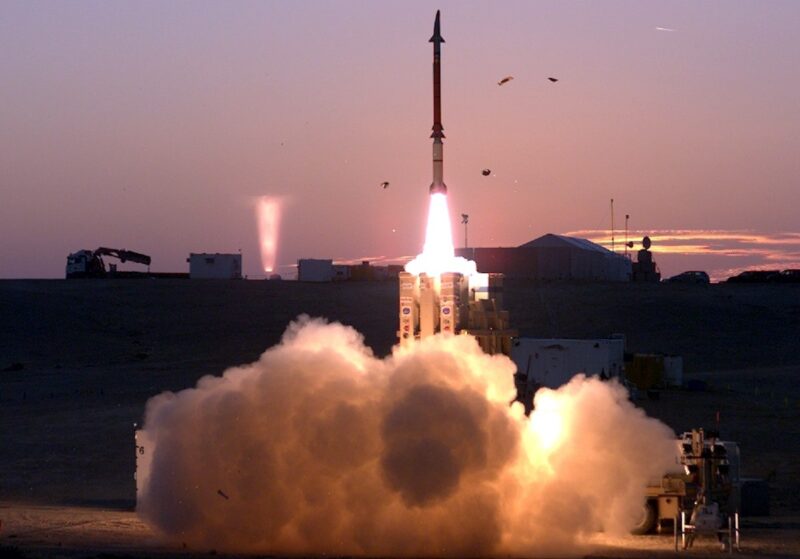
Israel’s mid-to-long-range aerial defense system, also known as the Magic Wand, operates as an anti-ballistic missile interceptor, capable of engaging drones, tactical ballistic missiles, rockets, and cruise missiles. Developed jointly by Israel and the United States, it can neutralize or destroy threats from distances ranging from 40 to 300 kilometers. David’s Sling, with a speed of 9261 kilometers per hour, is an integral part of Israel’s multi-layered air defense system, deployed alongside the Iron Dome to safeguard Israel’s capital, Tel Aviv.
Laser Blade… Effective Against Small-scale Attacks
Israel’s Laser Blade, stationed at the Gaza border, operates as a laser-based air defense system, capable of neutralizing dangerous drones, kites, small drones, rockets, mortars, and artillery shells in the sky. Deployed three years ago, it was developed by the Rafael Advanced Defense Systems company. Limited information is available regarding this system.
Iron Beam… Incinerating Enemy Rockets with Powerful Lasers
Israel now employs laser attacks to bring down Hamas’ rockets, grenades, and mortars. The Iron Beam Laser Point Defence System has been activated for the first time, capable of eliminating drones, rockets, missiles, and mortars from a considerable distance. Deployed nationwide, Israel activated it earlier than planned due to the recent attacks from Hamas. The Iron Beam laser air defense system has successfully intercepted numerous rockets over central Israel, with its video footage gaining viral attention.
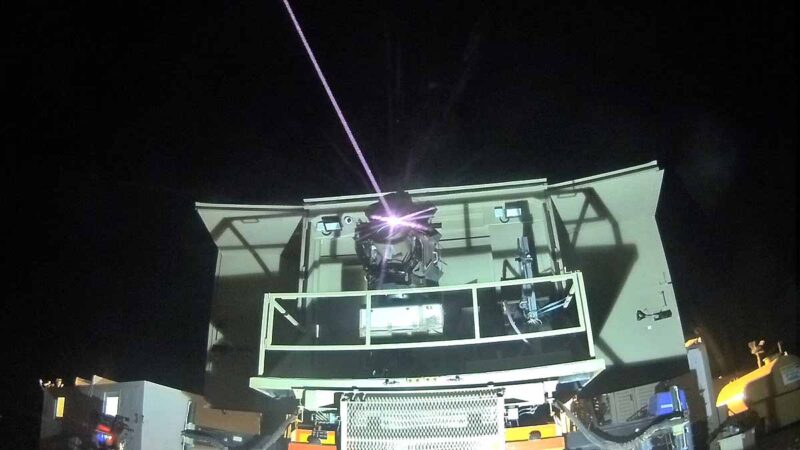
With a maximum range of 10 kilometers, Iron Beam incurs a minimal cost of $2000 per laser shot, compared to the approximate cost of $800,000 for intercepting a missile launched from the Iron Dome. As it doesn’t rely on physical ammunition, Iron Beam is cost-effective and ensures a constant defense capability.